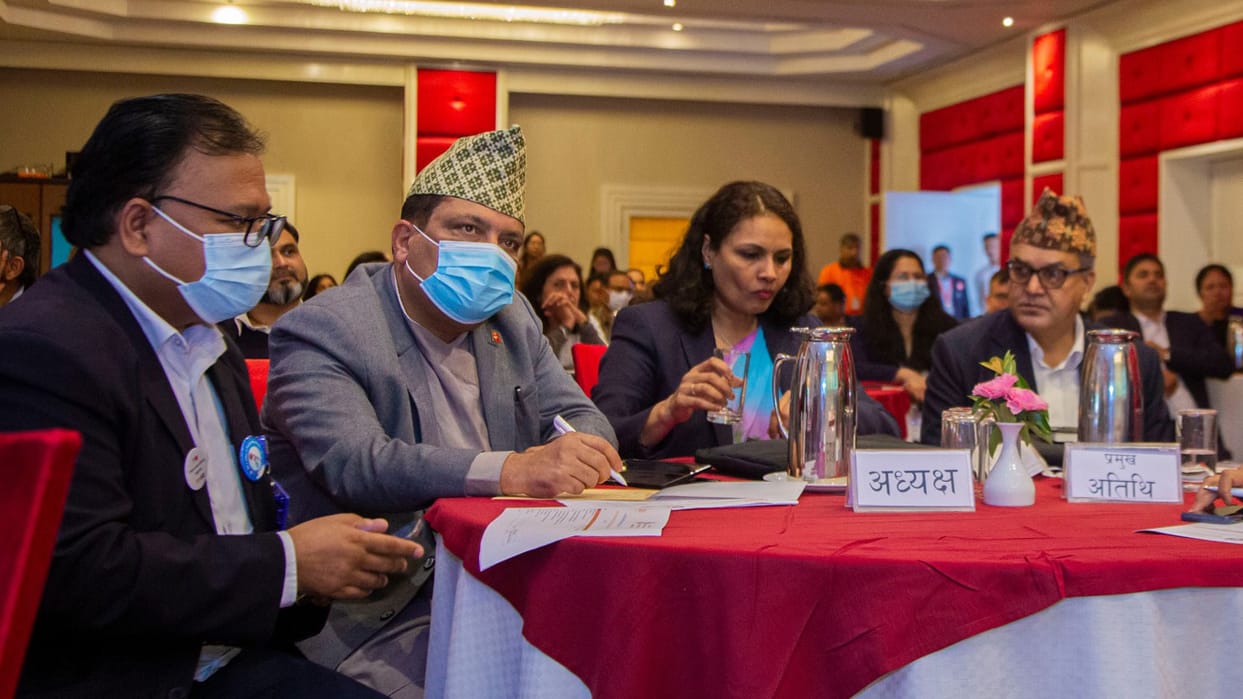
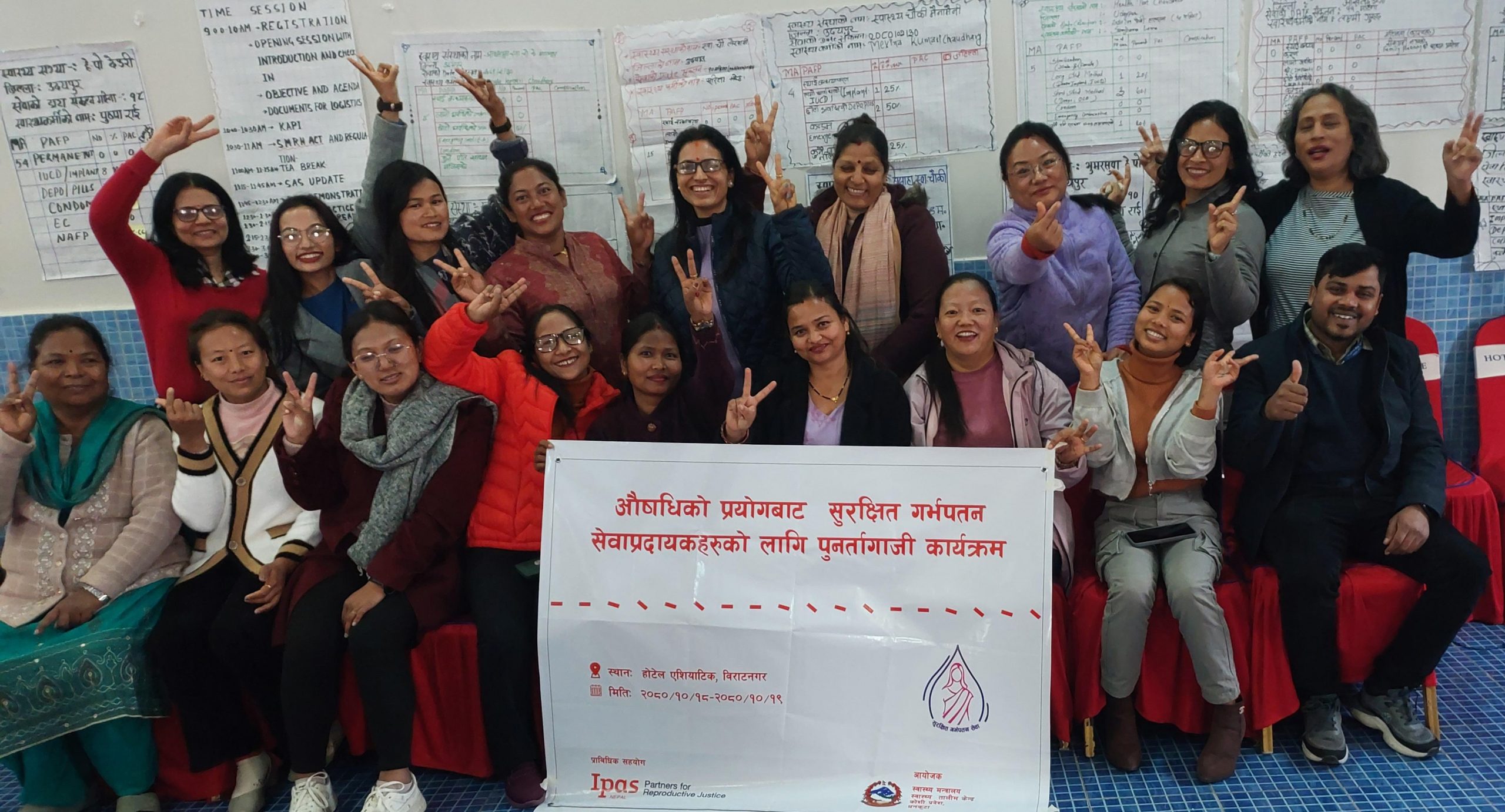
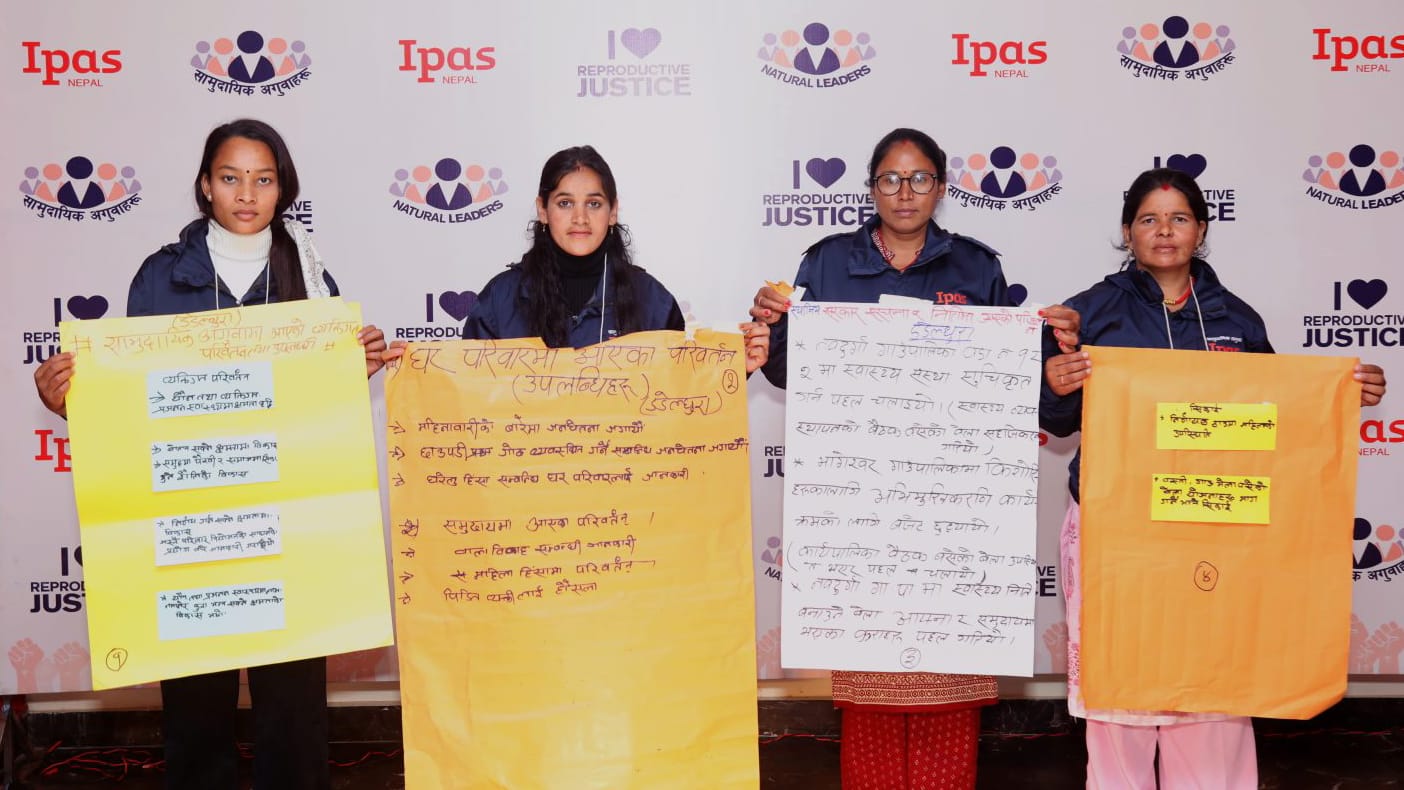
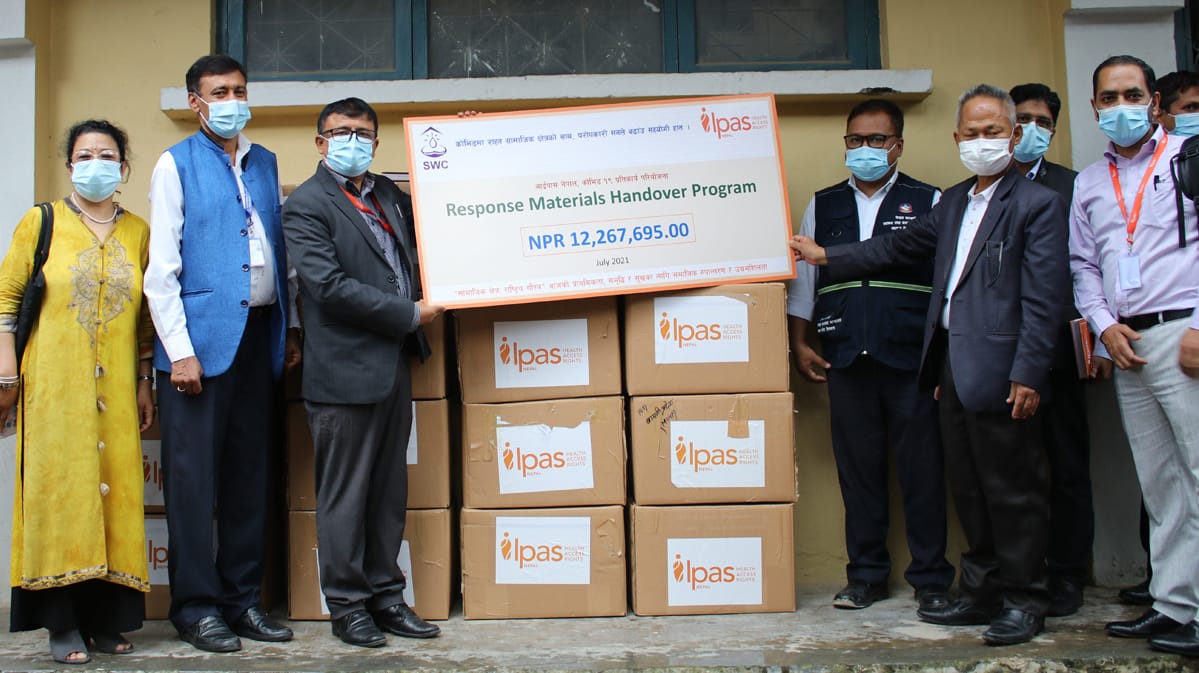


Ipas Nepal works intensively with the MoHP, the Ministry of Women Children and Senior Citizens, the Department of Health Services (DoHS) and different divisions, centers, and organizations at the Federal level while working closely with the Province government and Local Government .
Our Vision
Our Mission
Theory of Change
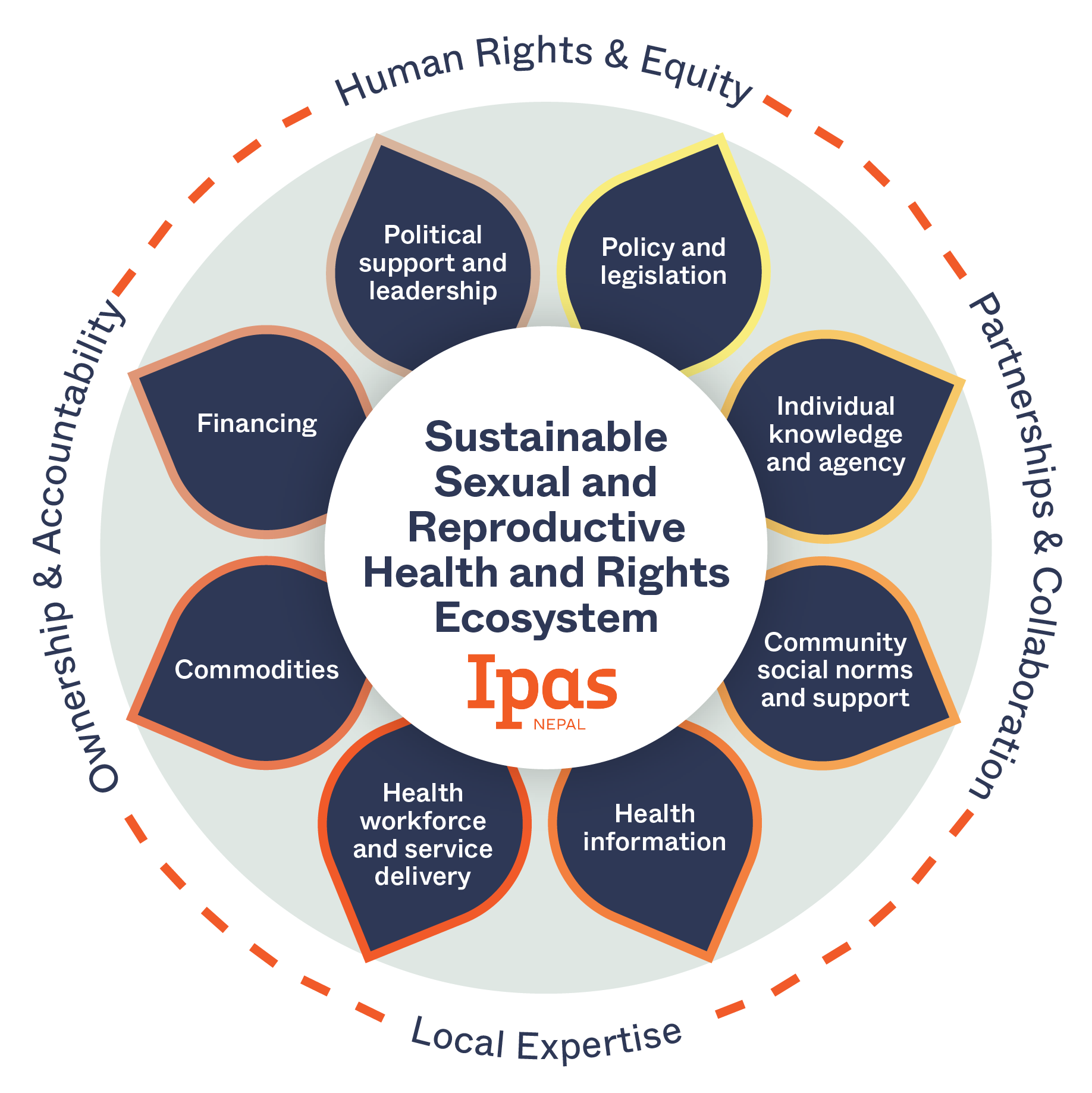
With a shared commitment to a resilient sexual and reproductive health and rights (SRHR) ecosystem, Ipas Nepal collaborates with government, civil society, and community actors to strengthen health systems for SRHR. This includes ensuring the availability, acceptability, and affordability of choices for abortion and contraceptive care.
Ipas Nepal emphasizes a deep understanding of individuals’ needs and preferences in abortion care, promotes social norm change around reproductive rights, reduces abortion stigma, and works to decrease gender-based violence. Ipas Nepal also addresses intersectional factors—such as climate change and humanitarian crises—that negatively impact sexual and reproductive health rights.
Ipas Nepal believes that through respect for sexual and reproductive health and rights, women and girls can live with dignity.
Our Values
Driven
We are impatient for a world where women and girls’ sexual and reproductive rights are fully realized and unsafe abortion no longer exists. We are focused and disciplined in our mission.
We make the most of our time, energy and resources and push ourselves to keep moving forward despite obstacles. We don’t let the perfect be the enemy of the good because we need safe abortion today. We care deeply about the impact and quality of all that we do.
Principled
We believe sexual and reproductive rights are basic human rights. Access to safe abortion is an integral and unassailable part of those rights. Safe abortion is also a fundamental part of basic health care. Our work on safe abortion promotes gender equity. Our actions are founded on these core beliefs. We have integrity when we do not compromise these principles and when we trust in women’s decisions.
Bold
We are unapologetic and unconditional in our commitment to a woman’s right to bodily autonomy. We solve problems through creative thinking, curiosity, and we challenge assumptions that might otherwise limit us. We make decisions based on experience and evidence and feel safe in taking calculated risks both in our communication and our action.
We always seek to challenge our own biases and assumptions and we are not afraid to create new pathways for women to exercise their right to safe abortion. We believe that this requires honest, direct communication and we are not afraid to tell the truth. We are also not afraid to laugh at ourselves and have moments of joy in our work.
Interdependent
Our goals are ambitious and larger than us. We are devoted to advancing the abortion field and the rights of women, not just Ipas. We share information, expertise and responsibility, and we strengthen our entire field as a result. We have a collaborative spirit and recognize when we are stronger together. We respect our colleagues, internal and external, by giving each other the benefit of the doubt and celebrating and supporting the work of others.
Key Approaches
Gender equality, diversity and social inclusion (GEDSI)
Partnership and capacity strengthening
Partnerships will be established with the objective to share vision, risks, burden, resources and accelerate the impacts. Partnership will nourish mutual trust, respect and equity. Ipas Nepal will further strengthen its participatory approach to ensure mutual accountability and promote equitable work with partners and stakeholders.
Health System strengthening
Ipas Nepal will work on health system strengthening through technical assistance so that maternal and neonatal health and reproductive morbidities can be reduced. The work could focus on overall health system strengthening as sexual and reproductive health systems and service provisions are closely linked to the broader health system. The system strengthening work will also contribute to universal health coverage. A client-oriented, provider efficient (COPE) approach will be followed for system strengthening work.
Sustainable SRHR Ecosystem
Knowledge management and innovation
Local ownership and co-creation
Accountability
Movement Building
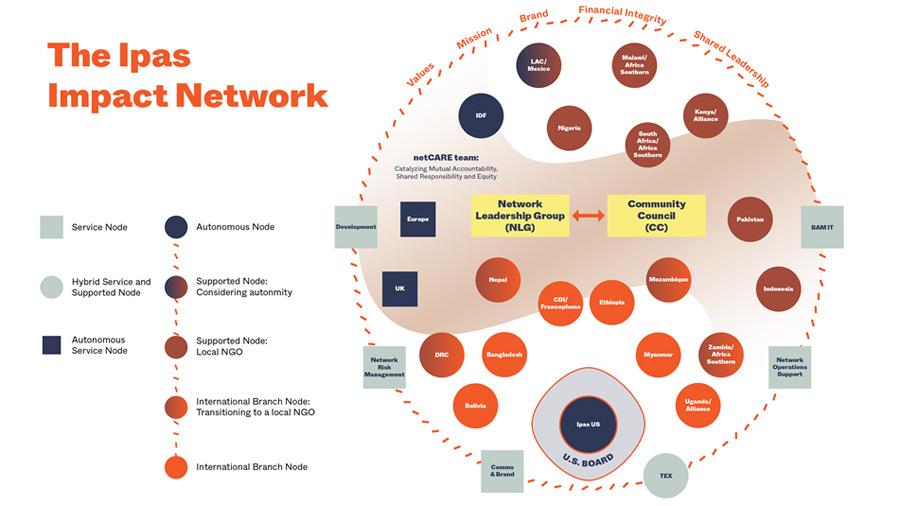
Ipas Impact Network
In June 2022, Ipas country leaders from across the organization signed a declaration agreeing to the purpose, framework, and principles of the Ipas Impact Network. Through this declaration they actively and publicly opted into the network, which is a mutually agreed upon relationship defined by our commitment, culture and belief in shared ownership, distributed power, and equity.
In the Ipas Impact Network, country and regional teams (which we are calling “nodes” internally) will be the primary implementing and fundraising parts of the network. This includes the US country node. Service teams will provide technical, financial, communications and other services which will be shared by the country and regional nodes or used by the entire network.
Ongoing Project Areas
- Current Project Areas
Our Team
Our Partners